



Hot news
What are the synthesis methods of alkyl glycosides?
2024-09-11 14:37
What are the performance characteristics of alkyl glycosides?
2024-09-11 14:36
What is the one-time usage amount of alkyl glucoside?
2024-09-11 14:35
What does the HLB value of alkyl glycosides mean?
2024-09-11 14:34

Lauryl betaine BS-12
Product Features Excellent solubility and compatibility, mild in nature, low in irritation, with good cleaning, thickening, and foam stabilizing effects; Has excellent stain removal, sterilization, anti-static, and hard water resistance; Has excellent low-temperature stability under both acidic and alkaline conditions; Good biodegradability, with a degradation rate of over 98%;
Category:
Betaine series
Key words:
Contact us
Product description
BS-12
Betaine series
Lauryl betaine
LAURYL-BETAINE
Molecular formula: the RN + (CH . 3 ) 2 CH 2 COO -
CAS No.: 68424-94-2
Validity: 1 year
Product Features
Excellent solubility and compatibility, mild nature, low irritation, good cleaning, thickening and foam stabilizing effect; excellent decontamination and sterilization, antistatic and hard water resistance; both in acidic and alkaline conditions Has excellent low temperature stability; good biodegradability, the degradation rate can reach more than 98%;
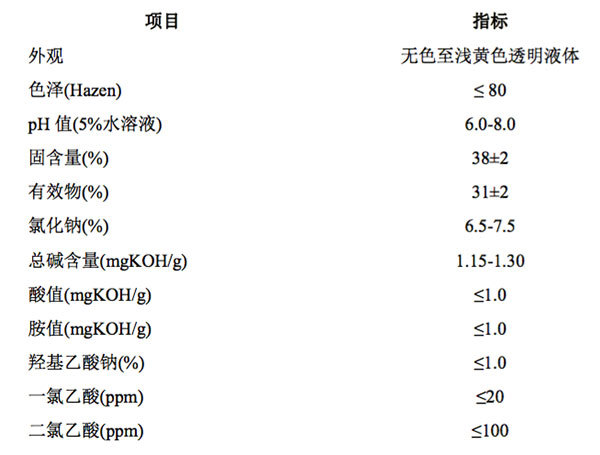
Product specification
Usage and dosage
Main uses: widely used in the preparation of shampoos, foam baths, sensitive skin preparations, children's cleansers, etc., also used as fibers, fabric softeners, etc.
Recommended dosage: 2.0~10.0%
Packaging and storage
Packing specification: 200kg plastic drum
Storage conditions: Store in a cool, dry place
----------------------------------------
Betaine has two main direct effects on animals:
① As an osmotic regulator, it is mainly stored in cells of organs such as the brain, kidneys, liver, and intestines, protecting cells from damage under high osmotic pressure conditions and thereby reducing animal stress;
② As a methyl donor (- CH3), it participates in methionine metabolism and provides methyl for animals.
The process of providing methyl groups to participate in methionine metabolism is also the main process of betaine metabolism and decomposition in animals, mainly carried out in the mitochondria of animal liver cells.
Next page


Legal Notices | Privacy Policy | Related Links | Contact Us
Copyright @ 2024 Guangzhou Zhonghai Chemical Co., Ltd. All rights reserved SEO Cityproducts